CTIS compressors
for tractor tires

Compressors

Optimized air supply via auxiliary compressors

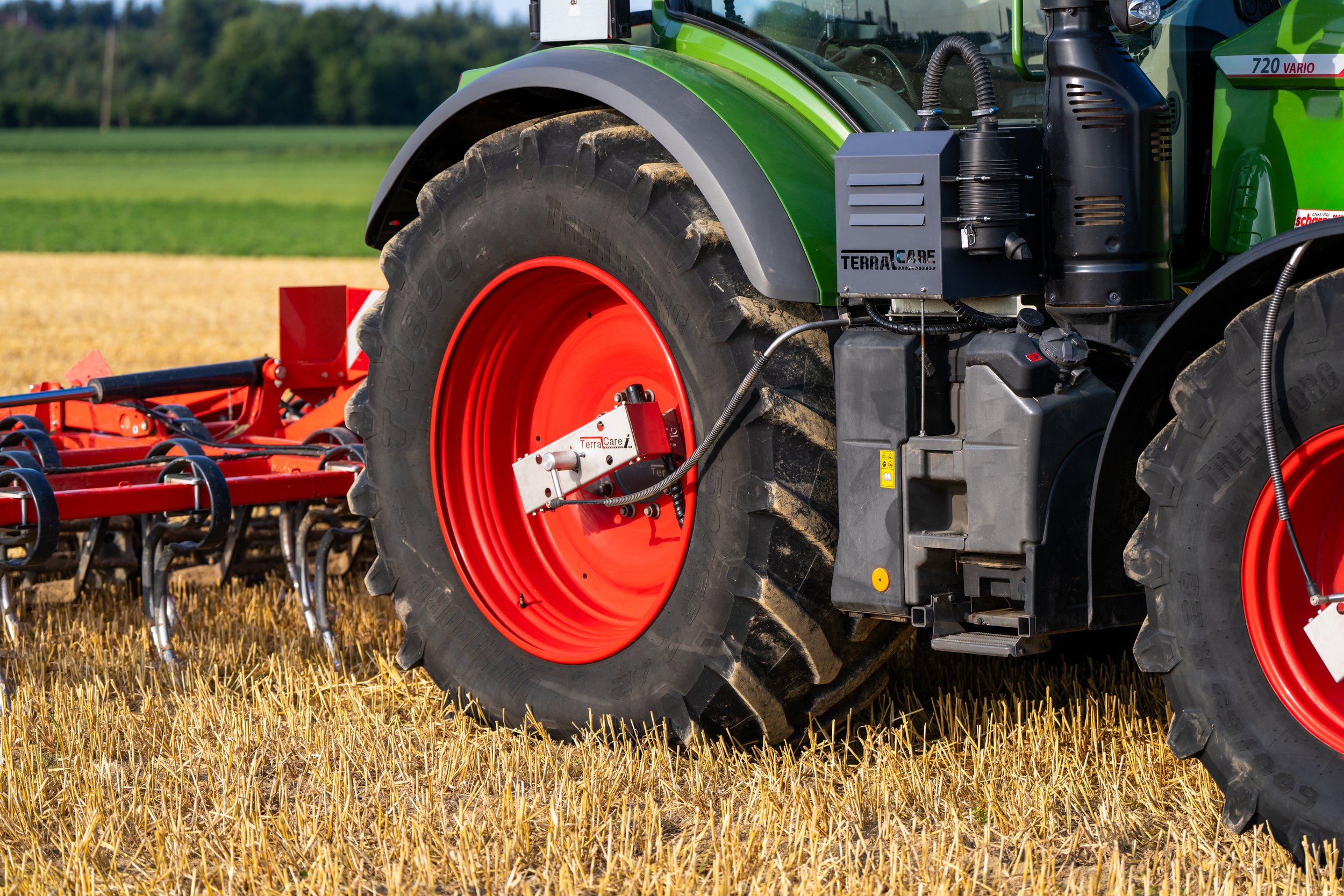
The TerraCare central tire inflation system is supplied with compressed air via the tractor’s compressor by default. To speed up the inflation process, we offer various types and designs of auxiliary compressors for the central tire inflation system.

All of these CTIS compressors are hydraulically driven and can be integrated into the load-sensing system if needed. Whether you need a new compressor or a simple retrofit for your tractor, we have the right compressor for your central tire inflation system and your setup. Just send us an inquiry and let us advise you!

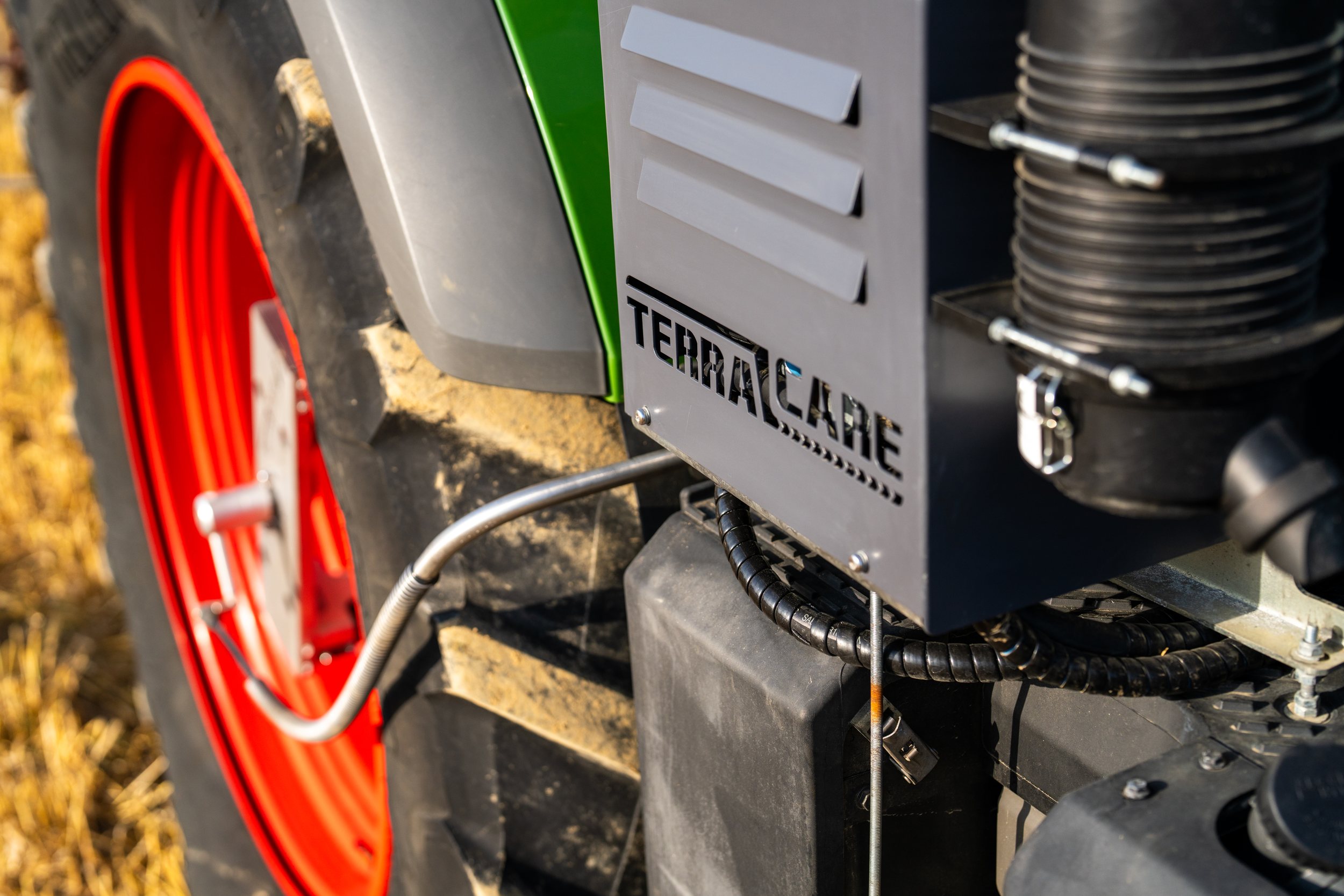
Kompressor an der Hinterachse eines Traktors

AirPower

AP/BM – AirPower base module

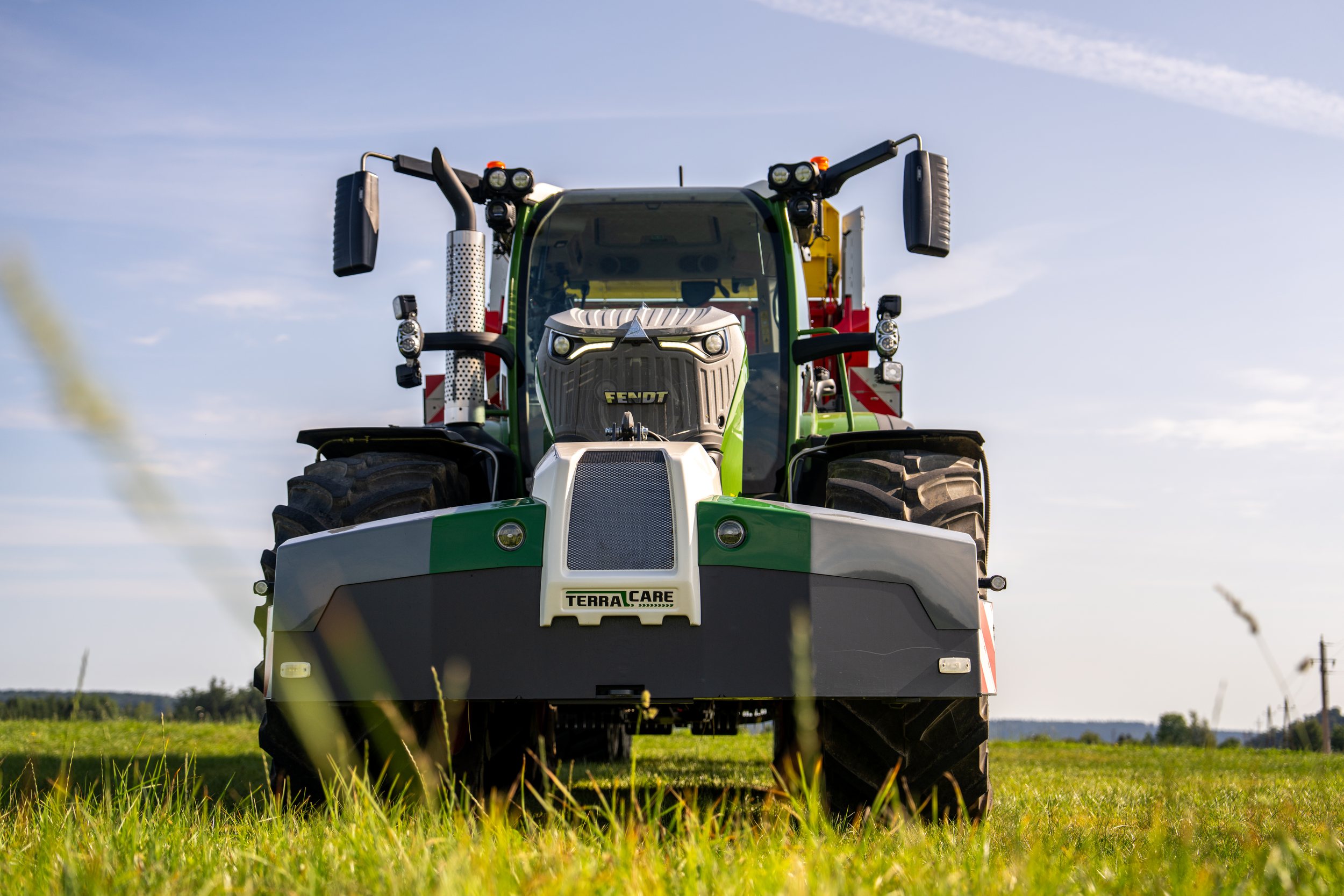
The TerraCare AirPower, which also serves as a front counterweight, is equipped with a compressor, pressure cylinders, and optionally with additional weight plates or an auxiliary storage tank. The AirPower functions as both a compressed air source and a compressed air storage module. This ensures rapid pressure adjustment for both the towing vehicle and the trailer.

The base module at a glance

Traktor von vorne mit Reifendruckregelanlage

Additional options

Additional options: CTIS compressors

AirPower add-on module – AP/ZM

AP/ZS – AirPower auxiliary reservoir
Additional reservoir for installation beneath the AirPower base module
– Storage capacity: 180 l – Weight: 240 kg – Additional height: 30 cm

AP/ZG – additional weight modules
Additional weight modules for expanding the AirPower base module
– Weight: 370 kg – Max. 3 units, each 4 cm – Individually removable structure mounted beneath the base module

AP/Light – headlights for the AirPower base module

SHY/800 – screw compressor

Compact screw compressor module in a single housing for mounting on a tractor or trailer

Special features:
– Compressor capacity: 800 l/min – Oil consumption 35 to 40 l – Max. pressure: 11 bar – Compact design for mounting directly on a tractor or trailer – Connection to the load-sensing system

SHY/1,200 – screw compressor

Compact screw compressor module in a single housing for mounting on a tractor or trailer

Special features:
– Compressor capacity: 1,200 l/min – Oil consumption: 35 to 40 l – Max. pressure: 11 bar – Compact design for direct mounting on a tractor or trailer – Connection to the load-sensing system

GDE/2,500 – equipment triangle with screw compressor

Auxiliary compressor with hydraulic motor for attachment to the tractor’s three-point hitch

Special features:
– 2,500 l/min compressor capacity – Integrated into the implement triangle – Max. pressure: 10 bar – Hydraulically driven

SHY/2,500 – screw compressor

Auxiliary compressor with hydraulic motor for mounting on a trailer

Special features:
– 2,500 l/min compressor capacity – Delivery includes housing – Fixed installation – Max. pressure: 10 bar – Can be connected to the load-sensing system – Return pressure monitoring – Oil flow: 55 to 75 l/min

KHY – piston compressor

Auxiliary compressor with hydraulic motor for direct mounting on the trailer

Special features:
– 1,080 l/min compressor capacity – Delivery includes housing – Fixed installation – Max. pressure: 15 bar – Oil consumption: 45 to 50 l/min

FAQs

Answers to the most frequently asked questions

What is the compressor’s role in a central tire inflation system?

The compressor is the central source of compressed air for a central tire inflation system. It generates the compressed air needed to quickly and reliably adjust tire pressure to the respective operating conditions.

As soon as the driver switches between on-road and off-road operation, the compressor supplies the central tire inflation system with sufficient air so that the tires can be brought to the desired pressure within a short time. A high-performance compressed air supply is therefore crucial for the function, speed, and efficiency of the entire system.

The compressed air supply comes from the tractor’s existing air compressor or from additional compressors mounted on or attached to the tractor, such as piston compressors or screw compressors.

Quick pressure adjustment saves valuable working time. If tire pressure needs to be adjusted within a few minutes, the driver can switch between the road and the field without long wait times.

Short changeover times increase productivity and ensure that the optimal tire pressure is actually utilized. If adjusting the pressure takes too long, operators often end up working with a compromise pressure—losing many of the benefits of a central tire inflation system.

An auxiliary compressor delivers significantly more compressed air than a standard vehicle compressor. This allows even large tires or entire trailer combinations to be inflated much more quickly.

This saves time every day when switching between different work sites. Contractors and operations with frequent transport runs particularly benefit from shorter downtime and greater efficiency.

The standard tractor compressor is primarily designed to supply compressed air to the vehicle. Its airflow capacity is sufficient for many applications but reaches its limits when dealing with large tire volumes or entire trailer combinations.

The auxiliary compressor was developed specifically for tire pressure regulation systems and delivers significantly greater air volumes. This considerably reduces the time required for pressure changes and allows the entire system to operate more efficiently.

Airbumper is the successor to AirPower and essentially performs the same functions.

The CTIS compressor is hydraulically driven via the supply/return lines or load-sensing (oil supply from the tractor).

We determine the requirements and options during a consultation.

An auxiliary CTIS compressor is particularly worthwhile when large volumes of air are needed in a short amount of time. This is especially the case with:

  • Large tractor tires
  • Slurry tanks
  • Transport and silage trailers
  • Multiple axles
  • Frequent switching between road and field
  • Contractors
  • Operations with high annual output

Thanks to significantly faster pressure adjustment, productivity increases in day-to-day operations. Optimal tire pressure is consistently maintained, allowing the benefits of the central tire inflation system to be fully realized.